

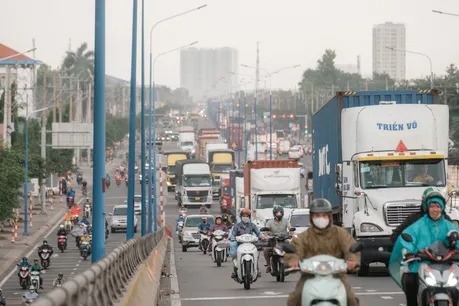
Vietnam’s Prime Minister has stated that the country’s economy must grow by 8.4 percent in the fourth quarter to meet its annual growth target. This ambitious goal highlights both the determination and the challenges facing one of Southeast Asia’s most dynamic economies. Despite global uncertainties, Vietnam continues to aim high, driven by strong exports, manufacturing expansion, and government efforts to stimulate domestic demand. However, achieving such rapid growth within a single quarter will require extraordinary performance across multiple sectors.
Vietnam has long been viewed as a rising economic star in Asia, with its manufacturing base attracting major global investors. The country benefits from its strategic location, competitive labor costs, and expanding trade relations. Over the past few years, Vietnam has emerged as an alternative hub for companies diversifying supply chains away from China. Industries such as electronics, textiles, and machinery have played a vital role in driving exports and sustaining employment. Yet, the global slowdown and reduced consumer demand in key markets like the United States and Europe have recently put pressure on Vietnam’s export-oriented growth model.
The Prime Minister’s statement reflects the government’s urgency to accelerate economic activity in the final months of the year. Authorities are pushing for stronger investment in infrastructure, improved administrative efficiency, and increased support for small and medium-sized enterprises. At the same time, they are encouraging local consumption to reduce dependence on external markets. With inflation largely under control and monetary policies remaining supportive, Vietnam hopes to balance growth with stability. The country’s central bank has maintained a cautious stance, ensuring that lending conditions remain favorable for businesses.
To achieve an 8.4 percent expansion, Vietnam will need strong contributions from its key sectors. Manufacturing must maintain momentum, especially in electronics and garment production, while tourism and services are expected to play a larger role as international travel rebounds. Agriculture, another major contributor to the economy, has also shown resilience, supported by technological advancements and rising exports of high-quality produce. Furthermore, foreign direct investment continues to flow in, with multinational companies expanding operations and committing to long-term partnerships.
However, analysts warn that external risks could make this goal difficult to reach. Global demand remains uneven, and logistical challenges persist in some export markets. In addition, rising energy costs and geopolitical tensions could affect both production and trade. Domestically, Vietnam faces the task of improving infrastructure and administrative efficiency to ensure that economic activity remains smooth and competitive. Still, the country’s record of strong management and adaptability gives hope that it can come close to its ambitious target.
In conclusion, the Prime Minister’s call for 8.4 percent growth in the fourth quarter underscores Vietnam’s determination to sustain its rapid economic development. While the target is challenging, it also reflects confidence in the country’s resilience, skilled workforce, and growing industrial base. With continued government support and private sector innovation, Vietnam remains well positioned to weather global headwinds. Whether or not it fully meets its goal, the drive to push growth forward demonstrates the country’s commitment to long-term progress and prosperity


Leave a Reply