

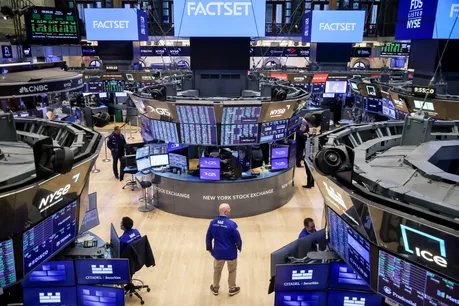
US stocks lost momentum after an early rally when fresh economic data showed that the country’s manufacturing sector has now contracted for the eighth consecutive month. The report added to concerns that the industrial side of the economy is weakening even as other sectors, such as services and consumer spending, continue to show resilience. The shift in market sentiment was quick, with major indexes pulling back from earlier gains once traders saw the latest numbers.
The data came from a widely followed survey of manufacturing activity that uses a benchmark of fifty to separate expansion from contraction. Any reading below that level signals a decline in output, new orders, and employment within the sector. The latest reading once again landed below fifty, confirming that factories continue to struggle with soft demand, high borrowing costs and cautious inventory management. The fact that the contraction streak has reached eight months makes the slowdown harder to dismiss as a temporary dip.
Manufacturing does not dominate the US economy the way it did decades ago, but it still plays a crucial role in investment cycles, supply chains and high paying jobs. When factories slow down, ripple effects are often felt in transportation, energy use, equipment orders and corporate capital spending. Weakness in this area can therefore foreshadow broader economic softness if the trend deepens or spreads into other industries.
One of the biggest pressures on manufacturers has been the higher cost of financing. Interest rates remain at levels not seen in more than two decades, making it harder for companies to fund expansion or upgrade machinery. At the same time global demand has cooled, with overseas buyers trimming orders as their own economies slow. Many companies have reacted by cutting production schedules, reducing hiring plans and lowering their expectations for growth over the coming year.
The stock market reaction shows that investors are increasingly sensitive to signs that economic growth may be losing steam. Over the past several weeks optimism had been building that inflation was easing and that the Federal Reserve might be in a position to lower interest rates next year. But persistent weakness in manufacturing raises doubts about how strong corporate earnings will be if demand cools and borrowing costs stay high for longer than expected.
Policy makers will be watching closely. The Federal Reserve has repeatedly said it is willing to hold rates steady until inflation is fully under control, even if slower economic activity causes discomfort in certain sectors. However if the slowdown in manufacturing spreads to employment or retail spending the pressure to cut rates sooner could increase. For now the central bank seems committed to a cautious approach, but each new data release has the potential to influence that stance.
Looking ahead investors will pay attention to the next round of corporate earnings from industrial companies along with updates on factory orders and employment levels. If the contraction continues deep into the new year it may mark a turning point for the broader economy. If it stabilizes or reverses the market may regain confidence that growth can continue without major policy changes.
The latest market reaction proves that Wall Street is no longer focused only on inflation and interest rates. Economic momentum is now back in the spotlight and the manufacturing sector has become an important warning signal


Leave a Reply