

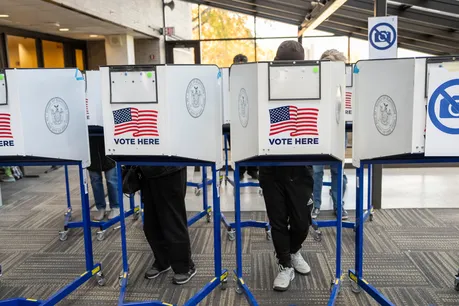
As the United States heads into a critical election cycle, the security of the country’s democratic system is being tested under unusual and challenging conditions. The federal government agency tasked with supporting state and local election security partners has recently scaled back key programmes and services just as threats to election infrastructure are more complex and persistent than ever. The result is that officials at the local level now face election day with fewer resources, less federal assistance and heightened exposure to cyberattacks, disinformation campaigns and other disruptions.
For many years the Cybersecurity and Infrastructure Security Agency (CISA) under the Department of Homeland Security has served as a central coordination point for election-security support. That support has included threat monitoring, information sharing, incident response assistance and coordination of physical security and cyber defences for polling places, vote-counting centres and state election systems. The agency’s election-infrastructure mission built on lessons from foreign interference in prior election cycles and reflected a bipartisan consensus around protecting democratic institutions. Despite the decentralised nature of U.S. elections being managed by state and local governments, the federal role provided a vital safety net.
But recent actions by the agency indicate a pull-back of its election-specific support. Local officials report that the Election Day “situation room” that had been operated to provide real-time threat intelligence and coordination has been abandoned. The agency has also announced a review of its programmes and paused certain election-security services and cooperative agreements previously relied upon by thousands of local jurisdictions. Without this federal back-stop many election offices especially smaller ones with limited budgets and lean staffing are now navigating an election with fewer external safeguards.
This scaling back comes at a moment when threats are growing both in number and sophistication. Cyberattacks on election infrastructure remain a key concern. Foreign adversaries and other malicious actors continue to target voter-registration databases, election-management systems and voter-facing websites. Meanwhile disinformation campaigns seek to undermine public confidence in results, foment chaos and erode trust in the electoral process. On the physical side concerns persist about threats to poll workers and counting centres. All of this occurs against a backdrop of rising partisan tension in many jurisdictions.
State and local election officials are raising alarms. Smaller counties in particular rely heavily on federal technical assistance, shared threat-intelligence feeds, incident response playbooks and even equipment such as network sensors that alert them to anomalies. When these supports are weakened, the burden shifts onto local offices which rarely have the spare capacity or expertise to replicate federal-level services. The financial and manpower gap is non-trivial: many election offices operate with minimal staff, combine technology and security roles, and face demands for transparency and compliance just as they must protect systems from attack.
In practical terms a reduced federal role means local jurisdictions may be slower to detect or respond to emerging threats, may lack access to timely intelligence or mitigation tools, and may find coordination across jurisdictions more difficult. It also raises the question of equity: large metropolitan jurisdictions may have the infrastructure and private-sector partnerships to compensate, but rural, under-resourced counties often do not. The result could be a two-speed election‐security model where some areas are far better protected than others.
Despite the challenges there remain opportunities for states and localities to bolster their defences independently. Strengthening state-level cybersecurity programmes, promoting inter-jurisdictional cooperation, investing in training for election staff and leveraging public-private partnerships are all feasible routes. But these efforts require time, funding and foresight resources that local offices may struggle to secure on short notice.
In conclusion the upcoming election cycle is being held under conditions of elevated risk and reduced federal support. The shift in the federal posture adds a meaningful layer of uncertainty to how prepared the nation’s election infrastructure is for the threats ahead. Ensuring that local jurisdictions are ready may now depend less on federal agencies and more on state governments, private-sector partners and local election administrators themselves.


Leave a Reply