

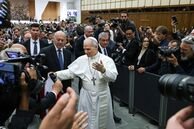
In a significant address this October, Pope Leo delivered a strong message about the power, risks, and moral responsibility surrounding artificial intelligence. He warned the world to stay alert about who controls AI and to ensure technology remains a servant to humanity not its master.
A Moral Call in a Technological Age
“Artificial intelligence is changing the way we receive information and communicate,” the pope said, before asking pointedly: “Who directs it and for what purposes?” He emphasized that it is not sufficient to praise technical capability; we must scrutinize oversight, ownership, and intent behind the systems shaping our future.
He argued that while AI opens vast possibilities, there is a real danger in letting it replace human judgment, especially in areas of truth, ethics, and meaning. He urged vigilance to prevent technology from dehumanizing society or being concentrated in the hands of a few. In his words, technology must not supplant human beings but must serve them.
Journalism, Truth, and the Role of Human Voices
Speaking to media professionals, the pope underscored the essential role of journalism as a bulwark against misinformation, manipulation, and the erosion of truth. He cautioned against the rise of “junk information” and insisted that reporters help audiences distinguish fact from fiction even as AI-generated content proliferates.
He called on news agencies to protect their integrity, not to surrender credibility for clicks, and to stand firm even amid economic and technological pressures. His call resonates in an era when AI tools can generate convincing but false narratives, deepfakes, or viral propaganda often faster than human editors can catch them.
Context: The Church’s View on AI
The pope’s remarks echo earlier Vatican positions on AI ethics. In January 2025, the Vatican released a doctrinal note titled Antiqua et nova, exploring how artificial intelligence intersects with human intelligence and warning against substituting human purpose with mechanistic processes. The document emphasized that AI must be governed by ethical reflection and respect for human dignity.
Earlier still, the Vatican had cautioned that AI carries a “shadow of evil” through its capacity to spread misinformation, destabilize social cohesion, or amplify inequality. The consistent message: AI is not neutral it carries moral weight depending on how it is built and deployed.
Why This Message Matters
The pope’s high-level voice adds moral weight to debates often dominated by engineers, regulators, and corporations. As AI becomes more central in media, governance, health, and decision making, his warning is a reminder that technical progress without ethical guardrails can become dangerous.
It also raises essential questions:
Who owns and trains the models, and whose values do they encode?
How transparent are decision pathways in AI systems?
Are people displaced or marginalized by algorithmic decisions?
How can oversight be decentralized and not concentrated in powerful tech conglomerates?
Looking Ahead: An Ethical Compass for AI
As the AI era unfolds, the pope’s message may influence governments, technology firms, and civil society. We may see increased calls for accountability, transparency, and “human in the loop” systems. We may also see efforts to regulate AI more strictly, especially in domains like news, politics, healthcare, and justice.
Ultimately, his plea is this: don’t let artificial intelligence become a vehicle for power without moral restraint. The question is not whether we can build more capable machines but whether we can build them wisely, with full attention to human dignity, truth, and purpose.


Leave a Reply