

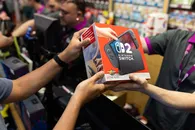
Nintendo is riding a wave of momentum as its new hardware launch gains traction and the company raises its forecasts for both device sales and profitability. The recently released console, known as the Switch 2, has exceeded expectations in its early months and the company has responded by lifting its full-year sales projection from 15 million units to 19 million units for the fiscal year ending March 2026. At the same time Nintendo raised its full-year operating profit forecast by around 16 percent to approximately 370 billion yen. These moves reflect both strong demand and confidence in the product’s short-term and medium-term potential.
The numbers reveal serious growth. In the first half of the fiscal year Nintendo reported net profit soaring by roughly 85 percent year-on-year while sales more than doubled. The lift is driven in large part by the launch of the Switch 2 in June, which has already sold over ten million units by the end of September. Early reports had shown six million units sold in just the first several weeks after launch. At the same time key first-party game titles bundled or released for the new console are performing well and helping to drive the hardware. This strong start has allowed Nintendo to confidently raise its outlook.
Why does this matter? For one thing Nintendo’s ability to generate upward revisions is a positive signal to investors and the market about demand strength and product relevance. It suggests the company is not simply relying on past success but is executing a fresh hardware cycle effectively. For another the hardware-software ecosystem appears to be functioning: the new console is selling well, the games are selling, and consumer appetite is clearly present. A successful hardware generation often revitalises an entire product line, stimulates accessory and software sales, and may lengthen the life cycle of the platform.
However the situation is not without its challenges. While raising the target to 19 million units is a strong vote of confidence the company still faces external factors: global supply-chain constraints, component cost pressure, and trade-policy uncertainty. Indeed Nintendo launched the Switch 2 amid a backdrop of trade tensions and a shifting hardware market environment. The new console is priced higher than its predecessor, meaning that to meet the targets Nintendo will need to maintain strong game release schedules, broad market availability, and consumer enthusiasm. There is also the question of sustaining momentum beyond the initial surge of interest and across regional markets.
The importance of the game line-up cannot be overstated. Nintendo has several major releases in the pipeline that are expected to support sales into the holiday season and beyond. The combination of appealing hardware and compelling content is what gives the revised forecast validity. In addition Nintendo indicated it will increase dividend payout ratio to share the gains with shareholders, which further underscores the strength of the results and the company’s financial health.
From a strategic perspective this upward revision has broader implications. It reinforces Nintendo’s position in the competitive console market and signals that it may be in the midst of a renewed hardware cycle. For consumers it means more choice, more games and potentially longer support. For industry watchers it suggests that Nintendo remains a key player capable of delivering major hits and shaping gaming ecosystem dynamics. And for the company itself the challenge is to translate early success into sustained growth rather than a short-lived spike.
In conclusion Nintendo’s decision to lift its Switch 2 sales forecast alongside a substantial profit increase marks a clear positive inflection point. The company has delivered on early promise, met strong demand, and now stakes a higher claim on its future growth. The next phases will test how well it can keep the momentum going, how the global environment behaves and how execution across software, hardware and services continues. But for now the outlook is brighter than many expected and Nintendo appears to be back in the ascendant


Leave a Reply