

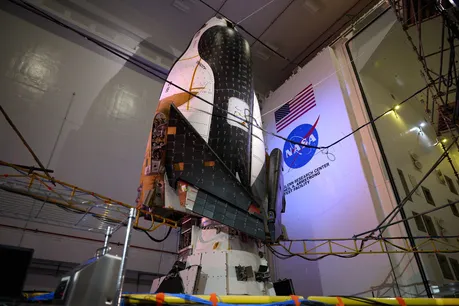
NASA’s updated plans for the International Space Station (ISS) are creating waves across the commercial space industry, and Sierra Space appears to be one of the most affected players. The agency’s newly revised timeline for ISS operations and the gradual transition to commercial space stations have cast uncertainty over Sierra Space’s future missions and funding prospects.
NASA’s Updated ISS Strategy
In a recent policy update, NASA reaffirmed its intent to retire the ISS by 2030 while prioritizing the development of commercial space destinations (CSDs) that will eventually take over low-Earth orbit (LEO) research and operations. However, the updated roadmap reportedly includes changes in contract structures, funding schedules, and technical milestones, which could significantly delay Sierra Space’s near-term progress.
Sierra Space, known for its Dream Chaser spacecraft and involvement in the Orbital Reef project a joint venture with Blue Origin has been banking heavily on NASA’s support to sustain its business model. But with NASA’s recent revisions, the company may now face financial and operational headwinds.
The Impact on Sierra Space
The revised ISS plan could reshape how NASA allocates funding for commercial partners. According to insiders, NASA’s new strategy emphasizes cost-effectiveness and mission readiness, favoring companies with proven track records in human spaceflight and station construction. While Sierra Space has made significant strides in spacecraft development, its commercial space station project is still in early stages compared to competitors like Axiom Space.
This shift could slow down Sierra Space’s access to government contracts and milestone-based payments, which are crucial for sustaining its ambitious projects. Analysts suggest that this move adds another layer of uncertainty at a time when the company is already navigating technical challenges, leadership changes, and investor pressure.
Broader Industry Implications
NASA’s updated ISS plan isn’t just about Sierra Space it reflects a broader evolution in the agency’s approach to public-private collaboration in space exploration. As the ISS nears retirement, NASA aims to transition from being a primary operator to a tenant on commercially owned space stations.
While this creates massive opportunities for private aerospace firms, it also raises the stakes. Companies like Blue Origin, Axiom Space, and Northrop Grumman are competing fiercely to secure NASA’s endorsement and funding for post-ISS operations. The revised plan means that only the most reliable, cost-efficient, and technologically advanced companies will survive in this high-stakes environment.
NASA’s Position
In an official statement, NASA maintained that its updated ISS plan is aimed at ensuring “a safe and sustainable transition to commercial operations in low-Earth orbit.” The agency reiterated that all partner companies, including Sierra Space, will have equal opportunities to participate provided they meet the new technical and financial benchmarks.
Conclusion
The uncertainty surrounding Sierra Space underscores the volatility of the emerging commercial space industry. NASA’s revised ISS roadmap might be a strategic step toward a more competitive and cost-effective LEO ecosystem, but for companies like Sierra Space, it introduces new challenges and a need to rethink funding strategies, partnerships, and timelines.
As the countdown to the ISS’s retirement continues, the next few years will be crucial in determining which commercial space firms will take the lead and which may struggle to stay in orbit.


Leave a Reply