

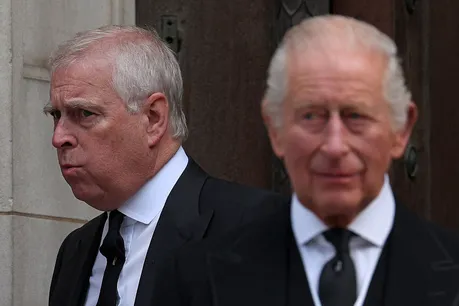
The ongoing tension within the British royal family has entered a new and dramatic chapter, as King Charles takes a firm stance against his younger brother, Prince Andrew, over his long-standing association with Jeffrey Epstein. What once seemed like a contained scandal has now resurfaced with greater force, reshaping public perception of the monarchy and raising questions about accountability, privilege, and justice at the highest levels of power. While Britain watches a king draw a clear line inside his own family, many in the United States are asking why similar clarity and action have not been taken toward the powerful figures connected to Epstein on American soil.
King Charles has made it clear that there is no path back to public life for Prince Andrew. Sources close to the palace suggest that the king views the reputation of the monarchy as inseparable from the behavior of its senior members. For Charles, protecting the institution means distancing it from any suggestion of scandal or impropriety. Prince Andrew’s legal history, including his settlement with Virginia Giuffre, has already cost him military titles, royal patronages, and public respect. Now, the king’s firm position appears to shut the door permanently. The message is unmistakable: status and family connection will not shield him from consequences.
This moment feels especially significant because the monarchy has long been criticized for protecting its own. For decades, royal scandals were managed behind closed doors with the goal of preservation, not transparency. But with public trust fractured and the role of the crown questioned in modern society, Charles seems determined to redefine what accountability looks like. Whether he is doing so out of moral principle, political necessity, or simple public pressure may be debated, but the result is the same: a brother has been cut off to protect the throne.
Meanwhile, across the Atlantic, the Epstein scandal has taken a very different shape. Despite years of headlines, leaked flight logs, court documents, and testimonies, many of the high-profile figures linked to Epstein and Ghislaine Maxwell have faced no legal or public consequence. Political leaders, major financiers, corporate executives, and celebrities remain unnamed in official records. The American justice system continues to move slowly, while public frustration grows. People are asking why a royal family, often stereotyped as untouchable, has acted faster and more decisively than the legal institutions of the world’s most powerful democracy.
The contrast raises uncomfortable questions. Is accountability easier to enforce inside a monarchy than inside a political system? Does fame and wealth still create different legal realities in the United States? Why can a king strip his brother of power, yet elected leaders struggle to confront powerful associates of a convicted sex trafficker?
King Charles’s decision will not solve the long shadow cast by the Epstein case, but it has shifted the narrative. It shows what consequences can look like when leadership chooses to act instead of delay. Whether the United States will face its own moment of reckoning remains to be seen. Some scandals fade with time. Others grow until they can no longer be ignored.


Leave a Reply