

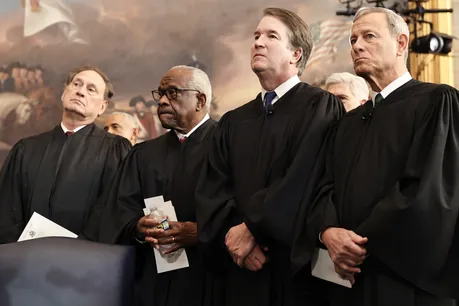
The debate over tariffs in the United States has entered a new and critical stage, and the final decision may rest with the Supreme Court. For years, presidents have used trade tariffs as a tool to shape economic policy, protect domestic industries, and influence foreign governments. However, the question now being raised is not about whether tariffs are useful, but whether a president has the unlimited power to impose them without restraint. This issue has grown even more important as markets speculate on what might happen if the court reviews the trade decisions made during the Trump administration. According to prediction markets, the court may not simply approve the tariffs as they were used before, suggesting that an important legal shift could be ahead.
The concern revolves around the balance of power. The US Constitution gives Congress the authority to regulate trade. Over time, however, Congress has delegated parts of that authority to the executive branch, allowing presidents to impose tariffs during national emergencies or for national security reasons. This flexibility gave President Trump the ability to impose sweeping tariffs on steel, aluminum, and large amounts of imports from China. Supporters argued that the tariffs protected American jobs and revived manufacturing, while critics said they damaged global trade and raised prices for US consumers. What makes the situation even more complex is that the justification for these tariffs was based on national security, a category that can be interpreted very broadly.
If the Supreme Court decides to review this case, its ruling could reshape how future presidents use tariffs. A decision limiting presidential power would mean that large trade actions would require deeper approval from Congress. That could make trade policy slower but also more predictable, reducing sudden shocks to markets and industries. On the other hand, if the court sides with previous practice and allows wide presidential discretion, then future leaders will continue to use trade tools quickly and aggressively. Investors, businesses, and governments around the world are watching closely, because the ruling will affect everything from supply chains to diplomatic strategies.
The biggest trade-off is between flexibility and accountability. Many economists say that markets work best when policies are stable, and businesses can plan for years ahead. Sudden tariffs create uncertainty and force companies to rethink production plans overnight. However, others argue that a president needs room to act fast, especially in a global economy where rivals like China are not tied to legislative approval. The decision is not only about law but also about the future of US influence in global trade.
Whatever the outcome, one thing is sure: this case is about more than tariffs. It is about whether economic power in the United States belongs primarily to the presidency or to the legislature. It is about how much authority a single leader should have in shaping the lives of millions through trade decisions. And it is about whether the country wants rapid action or structured debate when facing global competition


Leave a Reply