

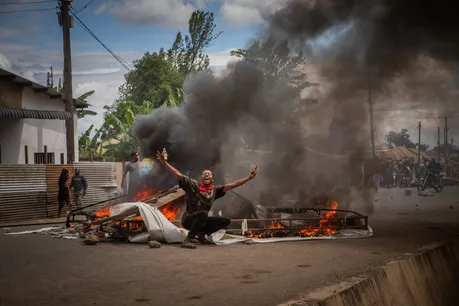
Calls have intensified for the International Criminal Court (ICC) to investigate allegations of mass killings that reportedly occurred during Tanzania’s recent election. Human rights organizations, political activists, and international observers have raised concerns that violence surrounding the election resulted in widespread loss of life, targeting opposition supporters and creating an atmosphere of fear. The situation has drawn attention to the challenges of maintaining electoral integrity and human rights protections in regions facing political tension.
Allegations suggest that the violence was both organized and systematic, with claims of armed groups and security forces being involved in suppressing dissent. Reports indicate that certain communities were disproportionately affected, raising questions about the targeting of specific political or ethnic groups. In such contexts, the ICC is often seen as a vital mechanism for accountability, particularly when national judicial systems are perceived as unable or unwilling to investigate and prosecute crimes effectively.
The ICC’s potential involvement carries both legal and political significance. Legally, the court has the mandate to investigate and prosecute individuals responsible for war crimes, crimes against humanity, and genocide. A probe into Tanzania would involve gathering evidence, interviewing witnesses, and analyzing patterns of violence to determine whether prosecutable offenses occurred. Politically, ICC scrutiny can place pressure on national governments to uphold human rights, adhere to international norms, and take measures to prevent future violence. Such intervention often sparks debate about sovereignty and external influence, but it can be crucial for delivering justice where domestic remedies are insufficient.
International human rights organizations have emphasized the importance of timely and impartial investigation. Documentation of events, survivor testimonies, and forensic evidence will be critical for establishing the facts. Observers note that without a credible inquiry, there is a risk that perpetrators may act with impunity, further destabilizing the country and undermining public trust in democratic institutions. Ensuring accountability is not only a matter of justice for victims but also a means of reinforcing the rule of law and deterring future violations.
The alleged violence during Tanzania’s election also highlights broader challenges faced by emerging democracies. Political competition can become highly polarized, leading to tensions that escalate into violence. Weak institutional frameworks, limited media freedom, and constrained civil society engagement can exacerbate the situation, making impartial investigations more difficult. International oversight and mechanisms like the ICC serve as safeguards when domestic systems struggle to manage or resolve such crises.
For Tanzania, the ICC’s potential probe could influence both domestic politics and international relations. It signals that the global community is watching and underscores the importance of transparency and accountability in governance. At the same time, it offers an avenue for victims to seek justice and for the nation to address systemic issues that may have contributed to the violence.


Leave a Reply