

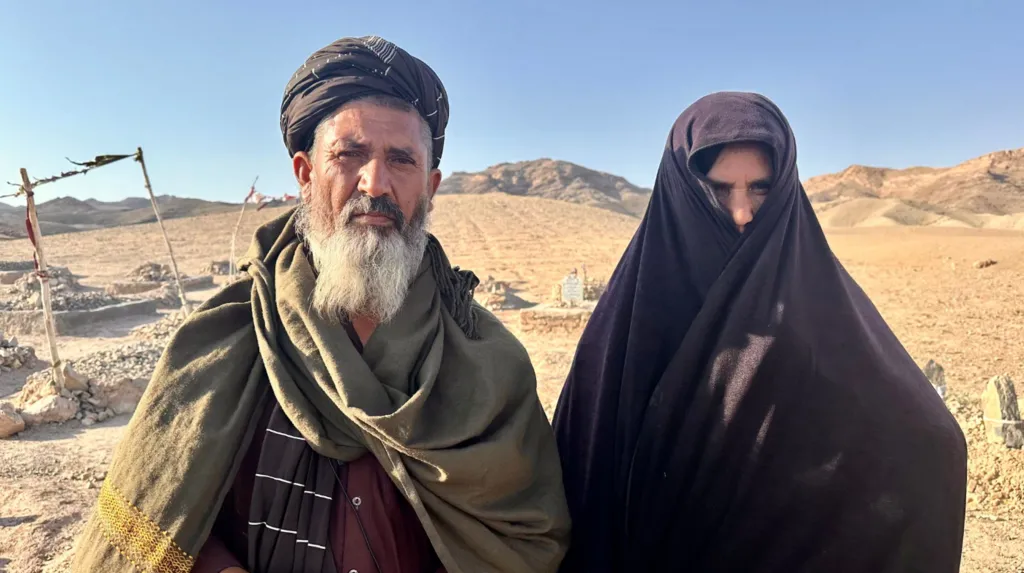
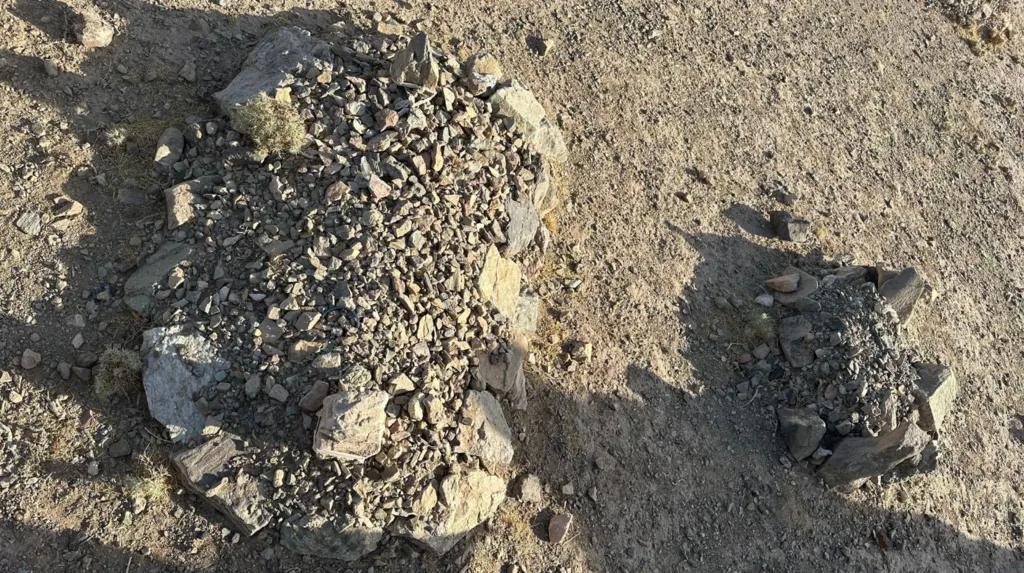
Under a haze of dust swept up by desert winds, Ghulam Mohiddin and his wife Nazo walk slowly toward the Sheidaee graveyard outside Herat, western Afghanistan. Here, three small graves hold the children they have lost in just two years—one-year-old Rahmat, seven-month-old Koatan, and three-month-old Faisal Ahmad.
“All three died from malnutrition,” Ghulam says quietly. Nazo’s voice breaks as she recalls cradling her boys. “One moment there’s a baby in your arms, the next your arms are empty. I hope every day that angels will somehow bring my babies home.”
The couple earns a meagre living cracking walnut shells and often goes without food. With no help from the Taliban government or aid groups, Ghulam remembers the agony of watching his sons waste away. “It felt like my body was erupting in flames,” he says.
Their story reflects a silent but devastating wave of child mortality. The UN warns that more than three million Afghan children are now at risk of severe malnutrition—the highest levels ever recorded in the country. John Aylieff of the World Food Programme (WFP) says funding cuts have worsened the situation: “Food assistance once kept hunger at bay for millions. That lid has now been lifted.”
Aid has plummeted as the US and other donors scale back funding, citing global crises and Taliban policies—such as barring Afghan women from working with NGOs—that hinder humanitarian work. Meanwhile, drought and the forced return of millions of Afghans from Iran and Pakistan have further strained food supplies.
In Sheidaee, the toll is stark. Of hundreds of graves counted in the small cemetery, villagers say two-thirds belong to children. In nearby homes, mothers cradle malnourished toddlers too weak to stand. Hanifa Sayedi soaks bread in tea to feed her one-year-old son, Rafiullah. On the hardest days, she resorts to giving him anti-anxiety and blood-pressure pills to make him sleep.
“I feel suffocated,” Hanifa admits. “I feel so guilty my children are hungry. Sometimes I think I should end it all.”
Doctors warn that such desperate measures can irreparably harm a child’s organs or even prove fatal. Nearly half of Afghan children under five are already stunted, according to the UN.
As Afghanistan faces an unprecedented hunger crisis, families like Ghulam and Nazo’s wait for aid that may never come—holding onto little more than faith and the hope that angels might, somehow, bring their children home.


Leave a Reply