

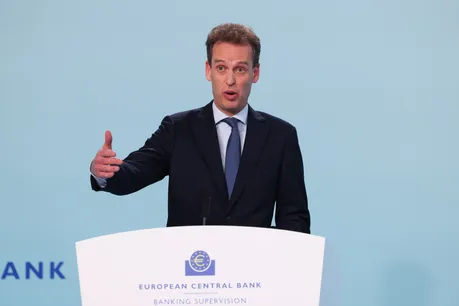
European Central Bank official Frank Elderson has recently stated that some of the downside risks to growth in the eurozone economy have eased. This comment has come at a time when the region is gradually recovering from a period of economic uncertainty caused by global inflation, energy market disruptions, and weakening demand. His remarks suggest that the European Central Bank sees signs of stability returning, even though challenges such as slow productivity and fragile consumer confidence continue to weigh on the economy.
Over the past two years, the eurozone has faced multiple pressures that have slowed growth. The surge in energy prices following geopolitical tensions, particularly the conflict in Ukraine, created difficulties for both households and businesses. Rising costs forced many firms to reduce production, while consumers struggled with higher living expenses. In response, the European Central Bank introduced a series of interest rate hikes to control inflation. While these measures helped to bring down price growth, they also created new challenges for borrowing and investment.
Elderson’s latest statement indicates a cautious optimism within the European Central Bank. He noted that the risks of a severe downturn have lessened due to improved energy supply conditions, stronger labor markets, and signs of consumer resilience. The easing of global supply chain bottlenecks and a gradual decline in inflationary pressure have also contributed to a more stable outlook. Some European countries are beginning to show modest growth in industrial production, and service sectors such as tourism and transportation are experiencing renewed momentum.
However, the recovery remains fragile. Elderson emphasized that while certain downside risks have eased, others still persist. High interest rates continue to limit new investments, and many small and medium-sized businesses are struggling with reduced credit availability. Furthermore, global economic slowdowns, especially in major markets like China and the United States, could still affect European exports. The European Central Bank must therefore maintain a careful balance between controlling inflation and supporting growth.
Elderson also highlighted the importance of sustainable investment as a driver for long-term economic stability. He argued that the green transition and digital innovation offer opportunities for Europe to strengthen its competitiveness and create jobs. Investments in renewable energy, green technologies, and infrastructure can help reduce dependency on external energy sources while promoting stable growth. The European Union’s focus on climate-friendly policies aligns with this vision and could play a crucial role in shaping the next phase of economic recovery.
In conclusion, Frank Elderson’s remarks reflect a cautiously positive outlook for the eurozone. The easing of certain downside growth risks is a welcome sign that the economy is stabilizing after a turbulent period. Yet, the path forward remains uncertain, and the European Central Bank will need to continue monitoring inflation trends, wage growth, and global developments closely. If policymakers manage to maintain the delicate balance between price stability and economic growth, Europe could move toward a more sustainable and confident future


Leave a Reply