

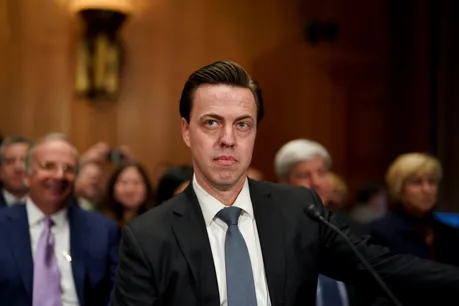
In a major development for U.S. financial policy, Banking attorney Graham Steele McKernan has officially been confirmed to a top domestic finance position within the U.S. Treasury Department. His appointment underscores the Biden administration’s continued focus on strengthening the nation’s financial stability, consumer protection, and regulatory oversight amid economic uncertainty.
Who Is McKernan?
McKernan, a seasoned banking and financial regulation expert, has spent years advising on complex financial laws, compliance frameworks, and market stability issues. Before his Treasury role, he worked closely with both private sector firms and government agencies, earning a reputation as a pragmatic reformer. His deep understanding of the banking sector makes him a key figure in shaping U.S. domestic financial policy at a time of economic transition.
A graduate of Harvard Law School, McKernan previously served as a senior counsel specializing in banking supervision, risk management, and digital finance. His appointment reflects the administration’s desire to bring in professionals with both public service ethics and private sector experience.
Role at the U.S. Treasury
As Under Secretary for Domestic Finance, McKernan will oversee crucial areas such as banking regulation, federal debt management, financial markets, and consumer protection policies. He will play a central role in coordinating with agencies like the Federal Reserve, FDIC, and Office of the Comptroller of the Currency (OCC) all of which are instrumental in maintaining economic stability.
One of McKernan’s top priorities will be implementing safeguards to prevent systemic financial risks. With the global economy facing inflationary pressures and the U.S. banking system recovering from regional bank failures, his expertise in compliance and crisis management will be invaluable.
Policy Focus: Stability and Modernization
Experts believe McKernan’s confirmation comes at a critical moment when the Treasury is balancing financial innovation with stability. The growth of fintech, cryptocurrency regulation, and the emergence of AI-driven finance pose both opportunities and risks.
McKernan is expected to advocate for modernized financial frameworks promoting innovation while ensuring consumer safety and data security. His background in financial law suggests he will also push for stronger anti-money laundering (AML) controls and tighter oversight of shadow banking activities.
Broader Economic Implications
His appointment sends a clear message to markets: the Biden administration intends to maintain a firm grip on domestic financial regulation while pursuing sustainable growth. Under McKernan’s leadership, analysts anticipate a renewed focus on climate-related financial risks, corporate transparency, and financial inclusion ensuring that economic growth benefits a wider section of society.
Global investors are also closely watching his stance on bank capital requirements and digital currency policies, both of which could shape the future of U.S. financial competitiveness.
Reactions from the Industry
The banking community has largely welcomed McKernan’s appointment, describing him as a “balanced reformer” who understands both Wall Street and Main Street concerns. Advocacy groups, meanwhile, hope he will strengthen protections against predatory lending and unfair financial practices.
Conclusion
Graham Steele McKernan’s confirmation as the Treasury’s domestic finance chief marks a pivotal moment for U.S. financial governance. His blend of legal expertise, regulatory insight, and modern financial vision positions him to guide the U.S. economy through a complex global landscape.
As he steps into this influential role, stakeholders across banking, fintech, and policy sectors will be watching closely because McKernan’s decisions could define the next era of U.S. financial stability and innovation.


Leave a Reply