

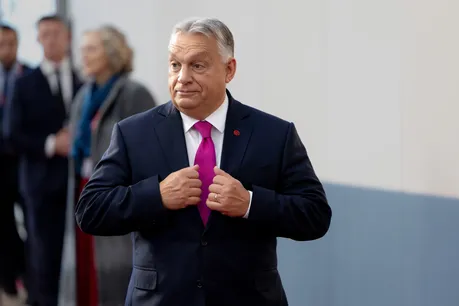
Hungary continues wrestling with persistent inflation well above the central bank’s tolerance range even as Prime Minister Viktor Orban publicly presses for interest rate cuts. At the same time, the National Bank of Hungary is signaling caution, saying inflation must fall sustainably before it can loosen monetary policy. The tension between government pressure and central bank prudence is shaping Hungary’s economic outlook in this pre-election period.
📈 Inflation Remains Elevated, Pressuring Policy
Throughout 2025, inflation in Hungary has stayed firmly above the central bank’s target band of 2 %–4 %. Analysts report that consumer prices, especially resilient categories such as food and services, continue to climb.
In response, Hungary’s central bank has held its benchmark interest rate at 6.5 % for many months one of the highest rates across the European Union. This decision reflects a cautious approach amidst ongoing inflationary pressures and a desire to dampen price expectations.
Deputy central bank officials have reiterated that there is “no scope for rate cuts” while inflation remains outside the tolerable range. They insist any policy easing must await sustained disinflation, not just short-term dips.
🏛 Political Pressure: Orban Pushes for Lower Rates
Despite the central bank’s caution, Orban has increasingly called for rate cuts to spur economic activity, especially ahead of the 2026 elections. He argues borrowing costs are too high and that the economy requires relief.
Orban’s message is echoed by other government officials, including the Economy Minister, who maintains that inflation can still be managed even if rates drop. The government’s narrative focuses on stimulating growth, investment, and consumption.
This push is complicated by Hungary’s recent fiscal initiatives, which include increased public spending, subsidized loans, and support programs for households all of which can risk adding inflationary pressures.
🔍 Economic Implications & Risks
1. Policy Credibility vs Political Demand
The central bank must tread carefully. Yielding to pressure too early may undermine its credibility in inflation control. But resisting political demands could strain relations in a polarized political climate.
2. Currency Pressure
The Hungarian forint weakened notably when Orban’s rate cut calls intensified reflecting market concern that a premature loosening could destabilize currency markets.
3. Inflation Expectations & Wage Pressures
Persistent inflation can fuel wage demands and raise future inflation expectations, making it harder to rein in prices without stronger monetary policy.
4. Growth Dilemma
Hungary’s economy is already facing sluggish growth. While lower rates might boost lending and investment, they risk aggravating inflation and threatening macro stability.
✅ What to Watch
Next inflation data whether core inflation (excluding volatile items) falls below 4 %.
Minutes / statements from the National Bank of Hungary clues about future rate policy.
Forint exchange rate movements especially reaction to any signals of loosening.
Fiscal measures announced by the government for signs they might offset or aggravate inflation.
In summary, Hungary finds itself in a delicate balance. Inflation remains stubbornly high, putting the central bank under pressure to stay tight. Yet political forces led by Orban are pushing for rate cuts to stimulate growth before elections. How Hungary navigates this tension over the coming months will be critical for both economic stability and political fortunes.


Leave a Reply