

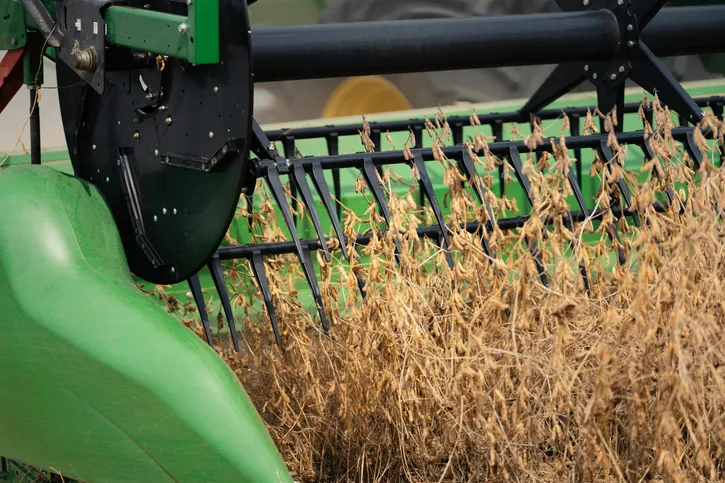
As the US soy harvest begins this year, farmers across America are describing the season as a “fight to survive.” The 2025 soybean harvest has opened under immense pressure from unpredictable weather patterns, falling global demand, and rising input costs. The situation has placed immense strain on one of America’s most vital agricultural sectors, with implications that stretch far beyond US borders.
Toughest Harvest in Years
From Iowa to Illinois, many farmers are witnessing yields that are lower than expected due to prolonged droughts and excessive heat during key growth stages. According to early reports from the US Department of Agriculture (USDA), soybean production is projected to decline compared to last year, with many regions facing yield reductions between 5% and 15%. For many small and medium-sized farms, these losses mean shrinking profit margins or none at all.
“Every bushel counts this year,” said one Illinois farmer. “We’re battling weather, high fertilizer prices, and weak market prices all at once. It’s a fight to stay afloat.”
Economic Pressures and Price Challenges
The soybean market, once a reliable source of income for US farmers, has become increasingly volatile. Falling demand from China the world’s largest soybean importer has intensified the pressure. With trade dynamics shifting and alternative suppliers like Brazil expanding production, US soybeans are facing stiff competition in global markets.
Adding to the challenge, input costs for fertilizers, pesticides, and fuel remain elevated. Even though global inflation has slowed, many farmers continue to feel the lingering impact of higher operational expenses from previous seasons. Profitability, therefore, remains slim despite efforts to cut costs and boost efficiency.
Climate Change and Sustainability Concerns
The ongoing climate crisis is also reshaping the soybean landscape. Extreme weather events such as droughts, floods, and heatwaves have disrupted planting and harvesting cycles, forcing farmers to adapt their traditional methods. Many have turned to sustainable practices including crop rotation, soil health management, and drought-resistant seed varieties but the transition takes time and investment.
Experts warn that if current trends continue, the US could see long-term reductions in soybean yields, which would further strain the global food supply chain. The stakes are particularly high as soy remains a cornerstone crop not just for food production but also for animal feed and biofuels.
Hope Amid Hardship
Despite the hardships, US farmers remain resilient. Innovations in agricultural technology including precision farming, satellite monitoring, and improved irrigation systems offer some relief. Federal and state support programs are also expected to help offset losses for struggling producers.
As the harvest season progresses, all eyes are on how global markets respond. If weather conditions improve and exports stabilize, there’s still hope that 2025 won’t mark another lost year for the US soy industry. But for now, America’s soybean farmers continue their “fight to survive” one acre, one harvest at a time.


Leave a Reply