

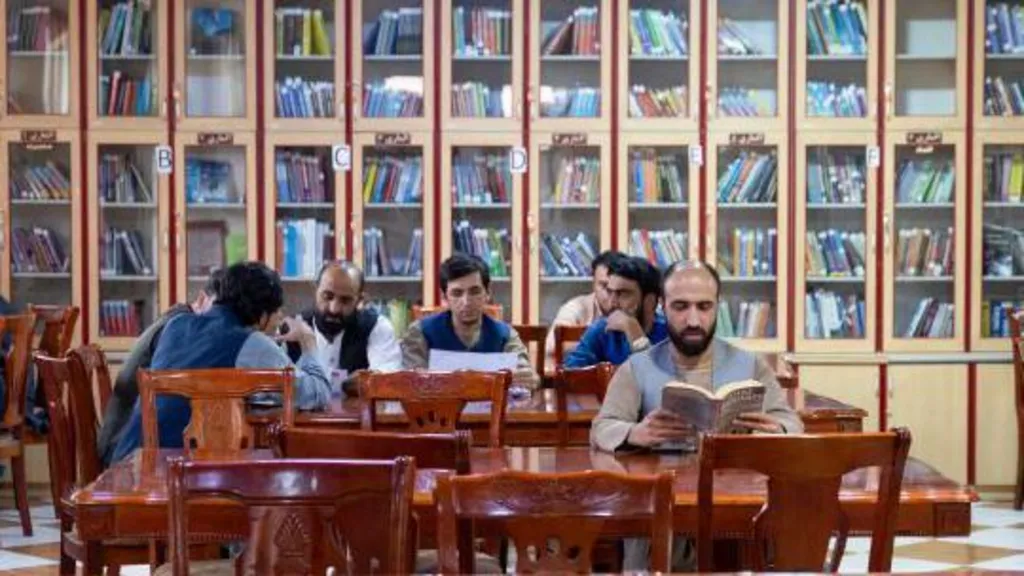
The Taliban have intensified restrictions on higher education in Afghanistan, removing books authored by women and outlawing subjects such as human rights and sexual harassment from university curricula.
According to BBC Afghan, 140 books by female writers—among them titles like Safety in the Chemical Laboratory—were among 680 publications deemed “anti-Sharia” or contrary to Taliban policies. A directive circulated to universities in late August also forbids teaching 18 subjects, six of which focus on women, including Gender and Development, Women’s Sociology, and The Role of Women in Communication.
The Ministry of Higher Education’s deputy academic director, Ziaur Rahman Aryubi, said a panel of religious scholars and experts made the decision. Officials also confirmed that books by Iranian authors or publishers—310 of the banned titles—were removed to “prevent the infiltration of Iranian content” amid strained relations between the two countries.
This crackdown follows a pattern of restrictive measures since the Taliban’s return to power four years ago. Women and girls remain barred from education beyond sixth grade, and midwifery programs were shuttered in late 2024, cutting off one of the last training opportunities for women.
Professors warn the ban will create “a substantial void in higher education,” as many of the removed works served as a bridge to global academic standards. One Kabul University professor told the BBC that faculty now face the challenge of writing their own course material under strict Taliban oversight—raising doubts about whether those resources can meet international benchmarks.
The Taliban maintain that their policies respect women’s rights “in line with Afghan culture and Islamic law,” but critics argue the measures represent a sweeping suppression of women’s voices, education, and participation in Afghan public life.


Leave a Reply