

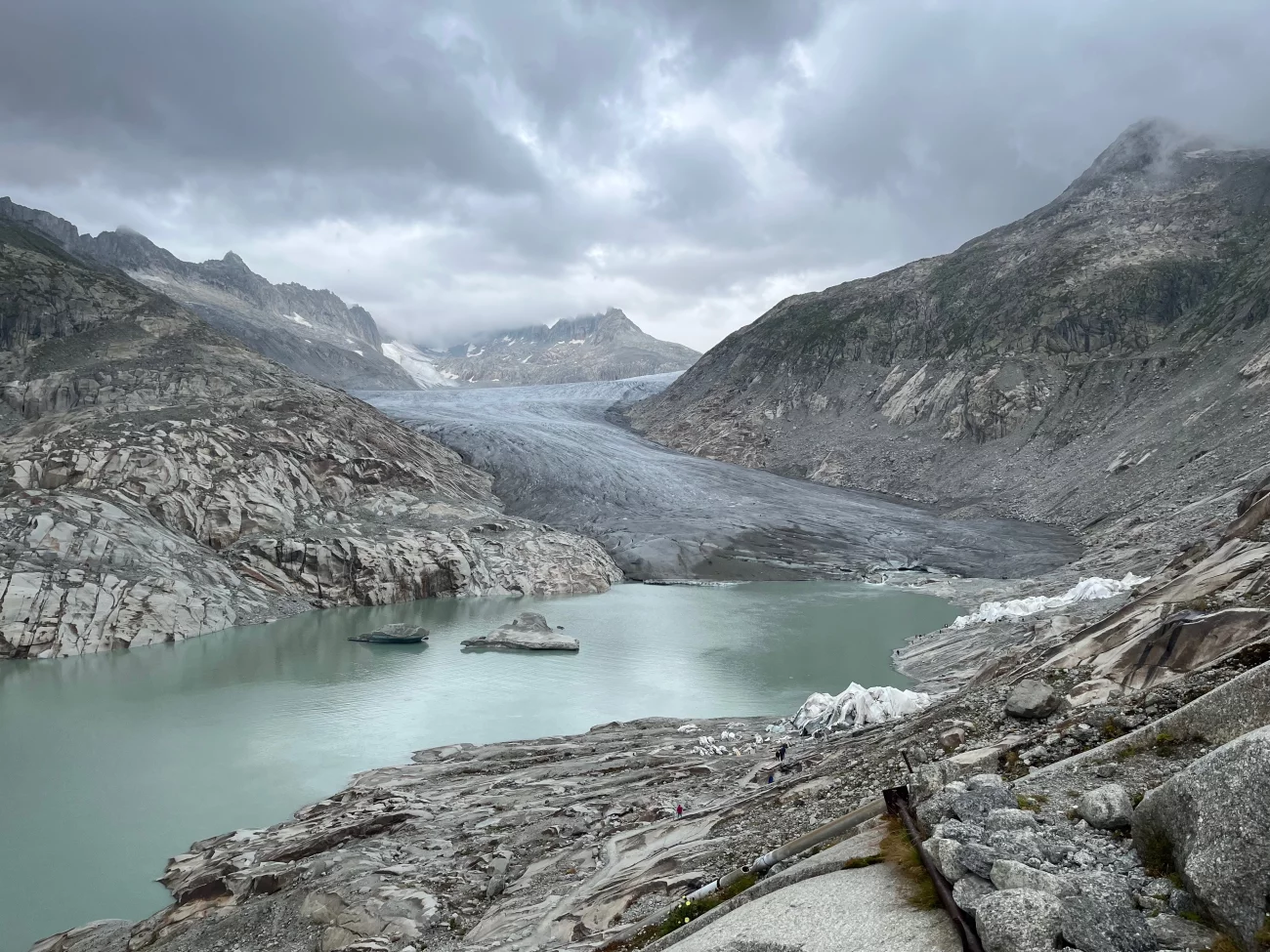
Melting Glaciers Threaten Europe’s Rivers and Communities
RHÔNE GLACIER, Switzerland — On a warm afternoon overlooking Lake Lucerne, Barbara Achrainer sips her latte and watches tourists board a boat beneath a hazy Alpine skyline. She has been living out of hotels since late May, when her life—and the nearby village of Blatten—changed overnight.
Achrainer had just begun managing the historic Hotel Fafleralp when panicked staff yelled, “We need to leave right now!” They fled as the Birch Glacier across the valley began sliding dangerously down the mountain. Scientists monitoring the glacier urgently convinced local officials to evacuate Blatten’s 300 residents. A week later, as predicted, the glacier broke loose, burying the village under mud, rock, and ice.
“It was beyond imagination,” Achrainer recalls. “The village is there, but there is no village.”

Daniel Farinotti, a glaciologist at ETH Zurich, says such an event is unprecedented in modern Swiss history. While it’s difficult to link a single disaster directly to climate change, Farinotti notes that the Alps’ warming temperatures—rising at twice the global average—likely played a role. Swiss glaciers have already lost two-thirds of their ice since 1900, and half their volume between 1931 and 2016. In just six more years, another 12% vanished.
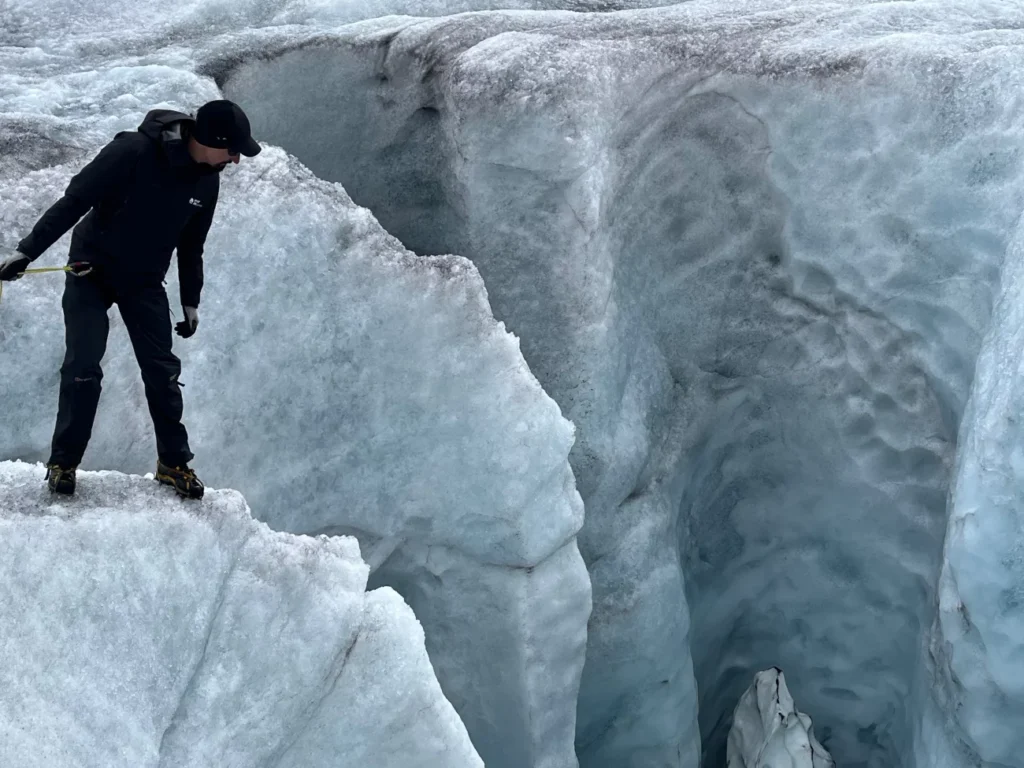
On the Rhône Glacier, the source of the Rhône River, Farinotti’s team tracks dramatic ice loss—up to six meters of thickness and dozens of meters in length annually. At this pace, he warns, the glacier could disappear entirely by 2100. Glaciers, he says, are “nature’s water towers,” feeding Europe’s greatest rivers—the Rhône, Rhine, Danube, and Po—through dry summers. Without them, rivers will run lower and less predictably, threatening water supplies, ecosystems, and economies.
Far downstream on the Rhine, in Duisburg, Germany, shipping CEO Steffen Bauer monitors the river’s depth: just 2.5 meters, a full meter below normal. Prolonged low water, once a rare late-summer inconvenience, now lasts up to four months, disrupting cargo transport on Europe’s busiest waterway.
In 2018, drought dropped Rhine levels so low that barges couldn’t pass, choking supply chains. Bauer’s company has since begun designing low-water barges capable of hauling 600 metric tons in barely over a meter of water. But with only about 100 barges built annually across the industry, he warns, “It will take years to adapt.”
As Alpine glaciers retreat, Europe faces an uncertain future: rivers reshaped, villages at risk, and economies forced to rethink how they move goods and manage water in a rapidly warming world.


Leave a Reply