

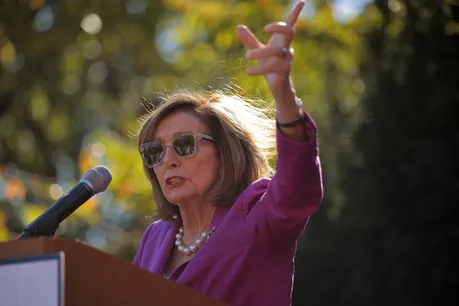
The announcement of Nancy Pelosi’s retirement from Congress marks the end of an era in American politics and leaves a significant void in leadership. As one of the most influential figures in the Democratic Party, Pelosi’s tenure spanned decades, during which she broke barriers as the first woman to serve as Speaker of the House and played a central role in shaping legislative priorities. Her departure not only signals a generational shift but also raises questions about who can step into the enormous political shoes she leaves behind.
Pelosi’s leadership style was defined by strategic acumen, deep knowledge of parliamentary procedures, and an ability to unify her caucus around contentious issues. She shepherded landmark legislation on healthcare, economic stimulus, and social policy, often navigating intense political opposition to achieve her goals. Her influence extended beyond Congress, affecting national and international policy debates. As a result, her retirement creates a leadership gap that will be difficult to fill, particularly for those seeking to balance political pragmatism with progressive ambitions.
The “stilettos” Pelosi leaves behind symbolize more than just political power—they represent her skill in wielding authority in a male-dominated arena. For women in politics, Pelosi’s career has been both an inspiration and a benchmark. Her ability to assert herself, negotiate complex deals, and maintain party cohesion while advancing a broader legislative agenda set a high standard for future leaders. The question now is whether her successor—or successors—can combine similar vision, political toughness, and coalition-building skills to maintain the Democratic Party’s influence in the House.
Her retirement also comes at a pivotal time for American politics. The Democratic Party faces internal divisions between progressive and moderate wings, alongside the ongoing pressures of national debates over economic policy, healthcare, and social issues. Pelosi’s presence often served as a unifying force, helping to navigate these tensions and keep legislative priorities on track. Without her, party leaders will need to find new ways to foster consensus while managing competing interests and external political pressures.
Moreover, Pelosi’s departure may influence the broader political landscape beyond Congress. Her stature and experience have given her a prominent voice in party strategy, fundraising, and national messaging. Her absence could shift dynamics in upcoming elections and shape the way Democrats approach coalition-building, policy priorities, and media engagement. The challenge for the party will be to cultivate leaders capable of stepping into high-profile roles while maintaining both credibility and effectiveness.
In conclusion, Nancy Pelosi’s retirement represents a historic moment in American politics, leaving both a symbolic and practical gap in leadership. The “huge stilettos” she leaves behind reflect her pioneering role, strategic skill, and impact on the legislative process. As the Democratic Party searches for capable leaders to continue her legacy, the coming months will be crucial in determining how effectively her influence can be carried forward. Pelosi’s career serves as a reminder of the power of perseverance, vision, and leadership in shaping the course of national governance.


Leave a Reply