

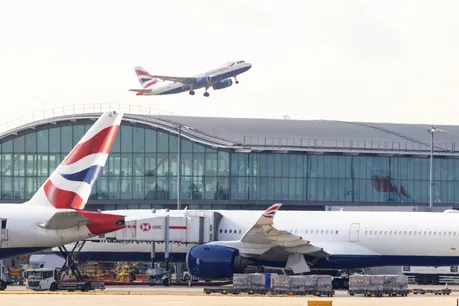
British Airways’ parent company has reported that weakness in trans-Atlantic travel has negatively impacted its overall revenue, highlighting a shift in travel patterns and economic pressures affecting the aviation industry. The company, International Airlines Group, which also owns Iberia and Aer Lingus, noted that demand between the United Kingdom and the United States has slowed compared to earlier expectations. This decline has raised concerns about the profitability of one of the most important routes in global aviation and signaled broader challenges for the travel sector.
The trans-Atlantic market has historically been one of the strongest sources of revenue for British Airways, driven by business travel, tourism, and premium cabin demand. However, recent months have seen a decline in passenger numbers and lower spending on higher-class tickets. Several factors have contributed to this weakness, including economic uncertainty, fluctuating exchange rates, and rising travel costs. With inflation and high interest rates affecting consumer confidence, both leisure and corporate travelers are becoming more cautious with their budgets.
British Airways has also faced operational challenges that have added to the pressure on earnings. High fuel prices, increased maintenance costs, and airport fees have all affected profitability. At the same time, the airline continues to invest heavily in improving its fleet, digital systems, and customer experience, which has further strained finances during a period of slower demand. The company’s management has emphasized that these investments are necessary to stay competitive in a rapidly evolving industry but acknowledged that the short-term impact on revenue is significant.
Another key issue affecting trans-Atlantic routes is competition. Airlines such as Virgin Atlantic, Delta, and United have increased their flight capacities, creating more options for travelers. This has led to price competition and reduced margins, particularly on business-heavy routes between major cities like London and New York. The growing presence of low-cost long-haul carriers has also attracted price-sensitive passengers, adding further pressure on traditional airlines to adapt their pricing and service models.
Despite these challenges, there are still signs of resilience in other parts of the business. European and Latin American routes have performed better, helping to partially offset losses from trans-Atlantic operations. Cargo revenue has also shown stability, as global supply chains continue to recover from disruptions. British Airways’ parent group remains optimistic that demand will improve in the long term, particularly as economic conditions stabilize and corporate travel gradually rebounds.
Industry analysts suggest that the current slowdown may be temporary, reflecting a broader cooling in international travel after a strong post-pandemic recovery. Many travelers took advantage of lifted restrictions in the past two years, creating an initial surge in bookings that is now normalizing. However, with global growth slowing, airlines must adapt to a more competitive and cautious environment.
In conclusion, the weakness in trans-Atlantic travel has become a key concern for British Airways’ owner, as it continues to affect overall revenue and profitability. Rising costs, shifting consumer habits, and stronger competition are forcing the company to rethink its strategy. While long-term prospects remain positive, the current period highlights the challenges facing even the most established airlines in a changing global market. Maintaining flexibility, efficiency, and innovation will be essential as British Airways navigates this turbulent phase in the aviation industry


Leave a Reply