

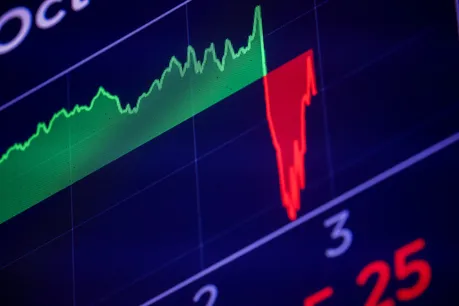
Investors are increasingly moving funds into U.S. Treasuries, signaling caution about the stock market and the possibility that a further decline in equity prices could be on the horizon. This so-called “flight to safety” reflects growing uncertainty about economic growth, corporate earnings, and global financial conditions, prompting investors to seek the relative security of government bonds.
Treasuries are traditionally seen as a safe haven during periods of market volatility. When investors anticipate potential declines in stock prices, they shift capital to bonds, which offer more predictable returns and lower risk. Recent trading patterns suggest that concerns about equity valuations and broader economic stability are influencing investment decisions. The move toward Treasuries indicates that some market participants believe that stocks may have further to fall, or at least that downside risks are significant enough to warrant caution.
Several factors contribute to this cautious sentiment. Inflation trends, central bank policies, and corporate earnings reports all play a role in shaping investor expectations. The Federal Reserve’s approach to interest rates, for example, directly affects both bond yields and equity valuations. If the market perceives that higher rates will persist or that economic growth may slow, investors may prefer the safety of Treasuries to protect capital. Similarly, mixed corporate earnings and economic indicators can amplify concerns about stock market performance, increasing the demand for government debt.
Market behavior also reflects psychological factors. When investors sense heightened risk in equities, even small negative signals can prompt larger moves toward safer assets. This can create a self-reinforcing cycle, where increasing Treasury purchases drive yields lower, further boosting the appeal of bonds relative to stocks. The current environment suggests that while there is confidence in long-term economic fundamentals, short-term uncertainty is shaping risk management strategies across portfolios.
The flight to Treasuries has broader implications for the financial system. Lower yields on government bonds can affect borrowing costs for businesses and consumers, influence mortgage rates, and impact overall economic activity. Additionally, a sustained preference for Treasuries may signal slower stock market growth, potentially affecting investor sentiment and capital flows across other asset classes. Policymakers and financial analysts closely monitor these trends, as they can provide early warning of shifts in market confidence and economic expectations.
Despite the move toward safety, it is important to recognize that not all investors share the same outlook. Some market participants remain confident in equities and view the current environment as an opportunity to invest at attractive valuations. The balance between cautious positioning in Treasuries and selective stock investments reflects a nuanced view of risk, reward, and economic prospects.
In conclusion, the recent flight to U.S. Treasuries highlights investor concerns about potential further declines in the stock market. Driven by economic uncertainty, interest rate expectations, and cautious sentiment, this trend underscores the enduring appeal of safe-haven assets during periods of market volatility. While equities may face continued pressure, Treasuries provide security and stability for investors navigating uncertain conditions, offering insight into broader expectations for economic performance and financial market trends.


Leave a Reply