

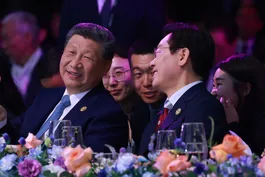
After more than a decade of strained cultural relations, China and South Korea have signalled a possible thaw in what has been one of the more significant chillings in East Asian soft-power diplomacy. At a recent summit in Gyeongju between China’s president and South Korea’s president the two leaders agreed to expand cultural cooperation, reigniting hopes that South Korean films music and television dramas may finally regain broader access to the Chinese market. The development offers a promising turn for an industry that suffered major setbacks when Beijing imposed informal restrictions on South Korean entertainment in response to Seoul’s deployment of a missile defence system.
The context behind this moment is important. Roughly ten years ago relations between Seoul and Beijing began to deteriorate sharply over the missile defence decision. In retaliation China quietly imposed economic pressure including curbs on tourism limitations on Korean goods and most notably informal bans on the import and broadcasting of South Korean popular culture. K-pop concerts and Korean television dramas effectively vanished from Chinese screens and the Korean entertainment industry felt the effects in both exposure and revenue. For many observers the so-called cultural ban became a potent symbol of how geopolitics could override flourishing cultural ties.
Now that appears to be shifting. During the summit both leaders emphasised the need to expand cultural exchanges and explore joint programming in the entertainment sector. South Korean lawmakers afterwards reported that China’s president responded positively to a suggestion of a large scale K-pop concert in Beijing and asked his foreign minister to follow up. That reaction sparked cautious optimism among the Korean pop industry which had long awaited access to the world’s largest entertainment market. For Korean artists and producers the possibility of renewed access to Chinese audiences opens up significant economic upside and creative potential.
Yet the path ahead remains complex. Officially the two governments acknowledged that legal and procedural constraints still stand in the way of full normalisation of the cultural relationship. Simply because remarks were exchanged at a summit does not mean formal regulations will change overnight. For South Korean firms the industry has learned from past experience that positive rhetoric must be followed by concrete adjustments in quota rules licensing and broadcast approvals before major access returns. Moreover the Korean presidential cultural commission even while welcoming the summit outcome cautioned it might be premature to celebrate too early.
The implications of a thaw go beyond entertainment. For South Korea the revival of cultural exports to China could significantly boost its soft-power footprint and add to tourism merchandise and brand recognition tied to Korean popular culture. Korean companies that specialise in music, drama production and fashion see this change as a strategic opportunity. For China it may reflect a shift in its regional posture, a willingness to reduce bilateral tensions and open its cultural gates again as part of broader diplomacy. Cultural flows often smooth broader political relations and this gesture may signal deeper cooperation.
However risk remains. Should actual access fail to materialise or if restrictions are quietly maintained under different regulations the industry could become frustrated once more. There is also a broader balancing act: South Korea must manage its relationship with China while maintaining strong ties with the United States and Japan. Cultural diplomacy often sits at this intersection of commerce politics and national interest.
In the end the summit in Gyeongju did not produce sweeping announcements. But the fact that top leaders publicly committed to cultural cooperation after years of frozen relations is itself meaningful. It suggests that the era of zero-visibility for Korean pop culture in China may be ending and that both nations recognise the value of cultural engagement as a bridge rather than a barrier. For Korean entertainers producers and fans the moment may well mark the start of a new chapter in which the Korean wave once more surges across the Yellow Sea


Leave a Reply