

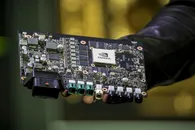
Intel shares surged after Nvidia announced a five billion dollar investment in the company, marking one of the most dramatic single-day rallies Intel has seen in decades. The move is more than a simple financial stake. It is part of a strategic partnership that signals a major shift in the semiconductor industry, where cooperation is becoming just as important as competition. For Intel, which has faced years of setbacks in chip manufacturing delays and lost market share, this investment is being viewed as a powerful vote of confidence from the most dominant player in artificial intelligence hardware.
The partnership will focus on co-developing new generations of chips for data centers and personal computers. Nvidia has built its reputation on graphics processing units that power artificial intelligence systems, while Intel’s strength has traditionally been in central processing units and long-established relationships with PC makers and cloud companies. By working together the two companies aim to create products that combine both strengths instead of forcing customers to choose one architecture over the other.
The market reaction was immediate. Intel stock jumped more than twenty percent in a single session as traders rushed to reprice the company’s future. For years investors had doubted Intel’s ability to keep up with newer rivals that moved faster and manufactured more advanced chips. The investment does not erase those challenges but it suggests that Nvidia sees real value in Intel’s technology road map and manufacturing capacity. Nvidia gains access to Intel’s foundry and design ecosystem, while Intel gains a partner with unmatched momentum in artificial intelligence.
Industry analysts say this partnership could reshape competitive lines. Instead of a divided market where companies fight to dominate every segment, the trend may shift toward alliances built around complementary strengths. This is particularly important as demand for advanced chips surges across cloud computing, automotive technology, robotics and personal AI devices. No single company can supply every part of that demand alone, especially as chip designs become more complex and expensive to manufacture.
Still the deal creates new questions. What does it mean for companies like AMD that compete with both Intel and Nvidia? Will regulators examine the partnership for antitrust concerns if it grows larger? What expectations are now built into Intel’s suddenly higher stock price, and can the company meet them quickly enough? Investors know that good news can lift a stock sharply but failure to deliver can send it just as quickly back down.
The coming months will show how deeply the partnership extends into product design, manufacturing and long term planning. If early chip projects succeed and customers adopt them at scale, the deal could mark the start of a new phase for Intel and a wider reshaping of the global chip landscape. If execution falters, the investment may be remembered as a bold bet that did not pay off.
For now the message from the market is clear. A company once viewed as falling behind has attracted the backing of the industry’s most influential player, and that has forced investors to reconsider what Intel’s future might look like. The semiconductor race is far from over, but the field just shifted in a dramatic and unexpected way


Leave a Reply