

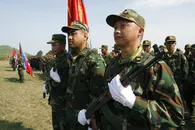
The United States and Cambodia have moved to revive one of their flagship joint military exercises for the first time in eight years, marking a notable shift in bilateral relations between the two countries. The announcement comes in the wake of a major peace deal between Cambodia and Thailand, and reflects broader efforts by Washington to re-engage with Southeast Asia in the face of shifting strategic dynamics.
The exercise in question is known as Angkor Sentinel, which was last held in 2017. At that time the drills were suspended amid increasing diplomatic friction, concerns about human rights in Cambodia and a general cooling of military cooperation with the United States. The revival of the joint training signals that both sides are willing to reset their relationship and explore deeper defence and security ties.
The timing is significant. The peace accord signed between Cambodia and Thailand earlier this year was witnessed by the US president, and the US is using that diplomatic momentum to strengthen its role in the region. For Cambodia the return of the drills offers an opportunity to diversify its security partnerships and to balance its traditionally strong ties with China. For the US the move supports its Indo-Pacific strategy by rekindling partnerships with regional players that may have drifted away.
From a practical standpoint the resumption of Angkor Sentinel is about more than training alone. It suggests that the United States is prepared to offer Cambodia greater access to military education, joint planning, perhaps even logistics and base access in the future. For Cambodia it means a signal of trust and willingness by Washington to treat Phnom Penh as a credible partner despite past tensions.
There are however challenges and caveats. The revival of drills does not mean old issues are resolved overnight. Cambodia’s human rights record, governance concerns and its longstanding military cooperation with China remain obstacles. Moreover the border peace deal with Thailand, although a diplomatic achievement, is still fragile and its success will depend on implementation and sustained commitment. Observers caution that unless follow-through is strong the symbolic value of the drills may outstrip real strategic change.
In the regional context this development could trigger responses from Beijing. China has invested heavily in Cambodia’s military infrastructure, including the modernisation of the Ream Naval Base, and Cambodia has been viewed as a key partner in China’s maritime strategy. The US-Cambodia rapprochement may thus force Phnom Penh to hedge more actively between major powers.
For students of geopolitics the move is a reminder of how military drills function as both practical training and signals of strategic alignment. When states agree to revive exercises it is rarely only about improving interoperability or tactics. It often signals trust, shared interest and a shift in posture. The fact that the United States and Cambodia are doing this now suggests both countries see strategic value in renewing ties.
In sum the revival of US-Cambodia defence drills is a noteworthy milestone. It is built on a peace deal that helped reset regional tensions, but its real importance lies in the security architecture it implies. If sustained, it may mark a deeper shift in how Southeast Asia’s smaller states navigate great-power competition. For now the exercise is back—but the real test will be what comes next.
If you like, I can look into the details of the drill schedule, participating forces and the likely future moves of the US-Cambodia defence partnership


Leave a Reply