

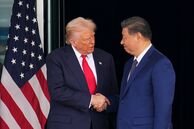
When Trump and Xi met recently in Busan, South Korea they appeared to reset certain trade tensions between the United States and China. Yet despite the fanfare and bold statements this meeting offered little in terms of concrete progress on TikTok’s future in the U.S. The long-running saga of how TikTok will be allowed to operate or be divided has once again been deferred rather than resolved.
The two countries issued joint outlines that they will “work together” to resolve ownership and data security issues tied to TikTok, which is owned by a Chinese parent company. But the key terms remain vague. China did not commit publicly to the structural changes that U.S. lawmakers and regulators have demanded. The U.S. side likewise did not secure explicit guarantees or a binding timetable. In short the rhetoric was positive but the deliverables were missing.
For TikTok in particular this means uncertainty persists. The U.S. passed legislation mandating that the app must either be divested or shut down unless new ownership arrangements are approved. The expectation among some had been that the meeting with Xi would yield a breakthrough. But instead what emerged was a continuation of a broad framework rather than a final agreement. In effect the meeting proved less pivotal than hoped for the deal.
Why did the meeting fall short? One reason is that TikTok is only one in a constellation of issues the two leaders discussed. Trade tariffs, rare-earth export controls, industrial policy, semiconductor regulation and agricultural purchases dominated the agenda. When the broader trade interests are large policy matters the fate of a single social-media application may take a back seat. Additionally China appears unwilling to concede on algorithm control and data localisation without getting substantial offsets in other domains. The U.S. side similarly is cautious about offering regulatory relief in the absence of enforceable guarantees.
From a market and regulatory standpoint this matters. Investors, users and service providers must now assume that the dot is not yet connected. For TikTok the lack of clarity means that planning remains difficult. Any acquirer or new structure would require both regulatory approval in the U.S. and agreement from China. The meeting did not change that calculus. For U.S. politics, the hearing of the issue will continue to ripple: lawmakers may push for even tighter deadlines or more aggressive enforcement if progress remains stalled.
In the broader scheme the summit may have created goodwill and reduced the risk of immediate escalation, but it did not solve the core problem. Some analysts describe the outcome as a pause ticket rather than a full stop. China agreed to cooperate. The U.S. agreed to keep talking. Yet neither side signed a binding deal. For TikTok watchers this means continuing in limbo.
It is also a reminder that high-level diplomacy can move the tone of relationships, but the real work lies in technical, legal and commercial negotiations that follow. Ownership structures, algorithmic control, national security assessments and user data flows all sit in the weeds and are seldom resolved by a handshake alone. The meeting between Trump and Xi may mark progress in tone, but its absence of substance on TikTok underscores how complex the issue remains.
In conclusion the Trump-Xi meeting was a show of renewed engagement between Washington and Beijing and may reduce market jitters in the short term. But for TikTok the outcome is far from decisive. The deal is not yet done. The pathway remains uncertain. And users, regulators and investors should expect a continued wait rather than immediate closure


Leave a Reply