

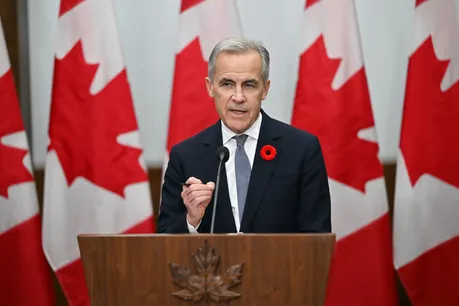
The relationship between Canada and the United States has gone through many ups and downs over the years, but the latest diplomatic friction offers an important reminder of how a single political move can trigger a wider economic reaction. Mark Carney, the Prime Minister of Canada, recently confirmed that he personally apologized to former US President Donald Trump over a controversial advertisement that criticized American tariffs. The situation may sound like a small political drama, but it carries larger lessons about diplomacy, global trade, and the cost of miscommunication between governments.
The advertisement in question was released by the Ontario government and featured a clip of former US president Ronald Reagan warning about the dangers of trade wars. The video was clearly aimed at criticizing US tariffs that had been introduced by the Trump administration against Canadian exports. While the ad was designed to appeal to Canadians frustrated by rising trade tensions, it evidently struck a nerve in Washington. According to reports, Trump took the ad as a personal insult and responded with additional tariffs, as well as a cancellation of ongoing trade talks with Canada.
What makes the situation more surprising is that Carney revealed he had already advised Ontario Premier Doug Ford not to release the ad, knowing it could damage the already fragile relationship between both countries. The fact that it was aired regardless shows how political decisions made at the provincial level can have national consequences. Once the ad was made public, the reaction from the White House was swift and aggressive. Economic retaliation came almost immediately, affecting Canadian exporters and adding pressure on businesses that rely on cross-border trade.
Carney later met Trump at a dinner during the Asia-Pacific summit in South Korea, where he apologized directly for the situation. He took responsibility on behalf of the country and attempted to reset the tone of the conversation. Trump reportedly accepted the apology but did not agree to resume trade negotiations right away. This shows that apologies may ease political tension, but they do not erase economic consequences overnight.
This entire episode highlights how deeply interconnected modern economies are. Canada and the United States have one of the largest trading relationships in the world. Millions of jobs depend on the smooth flow of goods across their shared border. A single political message, even an advertisement, can disrupt policies, negotiations, and long-term planning. What begins as a media statement can quickly turn into real-world financial damage for industries such as steel, agriculture, and automotives.
It also shows the growing challenge leaders face in controlling political messaging within their own country. Carney knew the ad was risky, yet he was unable to prevent its release. This raises a larger question about how federal and regional governments handle international issues. Domestic politics often reward strong rhetoric, but global diplomacy punishes it.
In the end, Carney’s apology may help calm the situation, but it also stands as a lesson that economic diplomacy is delicate. The world is watching not only what leaders say in official statements, but what appears in advertising, social media, and campaign messaging. A small spark can still start a large fire when trade and politics collide.


Leave a Reply