

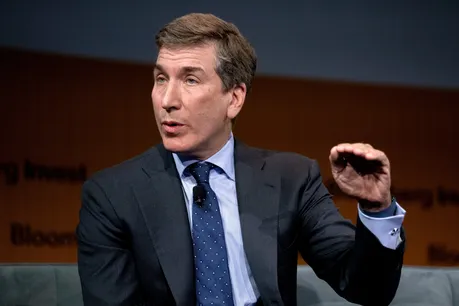
Veteran dealmaker David Taubman has issued a stark warning about the potential economic disruptions arising from the world’s accelerating shift toward artificial intelligence. As industries race to integrate AI into their operations, Taubman cautions that the transition, while full of opportunity, could also trigger a wave of structural shocks across labor markets, capital allocation, and corporate strategy.
Speaking at a recent financial conference, Taubman described the ongoing AI transformation as one of the most profound technological pivots in modern economic history. He noted that while the technology promises major productivity gains and cost reductions, it also threatens to displace traditional business models and destabilize entire sectors. The short-term effects, he suggested, may resemble an economic jolt as companies, investors, and governments struggle to adapt to the new realities of automation and data-driven decision-making.
One of Taubman’s chief concerns centers on employment. As AI tools increasingly take over analytical, administrative, and even creative roles, millions of workers could face disruption. While new jobs will inevitably emerge in fields such as AI engineering, data science, and systems design, Taubman argued that the pace of change may be too fast for many labor markets to absorb. Without proper retraining and education systems in place, the result could be widespread economic dislocation, reduced consumer spending, and rising inequality.
He also pointed to the growing imbalance between firms that can afford to invest heavily in AI and those that cannot. Large technology corporations and capital-rich multinationals are leading the charge, capturing data and market dominance in ways that could leave smaller competitors behind. Taubman warned that this concentration of technological power could reshape global competition and accelerate the consolidation trend already seen across major industries.
From an investment perspective, he noted that the AI boom is driving massive capital flows into technology infrastructure, from data centers and semiconductor fabrication plants to cloud computing and automation systems. While these investments are fueling growth in certain sectors, they are also drawing funds away from traditional industries and emerging markets. According to Taubman, this uneven capital allocation could lead to volatility as markets adjust to new value drivers.
Despite his cautionary tone, Taubman did not dismiss the promise of AI. He emphasized that artificial intelligence, if managed wisely, could unlock immense gains in efficiency, innovation, and global productivity. The challenge, he said, lies in navigating the transition without triggering social or financial instability. Governments will need to modernize policy frameworks, establish safeguards for data privacy and ethical AI use, and promote inclusive growth to ensure that the benefits of automation are widely shared.
Taubman also highlighted the importance of corporate responsibility in managing the shift. Companies, he said, must look beyond short-term profits and consider the broader implications of workforce displacement and societal change. Strategic foresight and long-term planning will be essential for firms hoping to remain competitive in an increasingly automated world.
Economists and investors are paying close attention to Taubman’s warning. Many agree that the AI revolution is reshaping economic fundamentals faster than past technological shifts, such as the internet or industrial automation. The rapid integration of machine learning into finance, healthcare, manufacturing, and logistics is already altering cost structures and productivity expectations.
In essence, Taubman’s remarks serve as both a caution and a call to action. The global economy stands on the brink of a transformative era powered by artificial intelligence. While the opportunities are vast, the risks of mismanagement are equally great. Navigating this profound pivot will require coordination between businesses, policymakers, and investors to ensure that the AI-driven future strengthens economies rather than destabilizing them.


Leave a Reply