

Europe is witnessing a historic surge in solar energy production, a development that has transformed the continent’s renewable landscape but also introduced new challenges for its power infrastructure. Record installations of solar panels across homes, businesses, and large-scale farms have made Europe a global leader in clean energy adoption. Yet the rapid pace of this expansion is now testing the limits of its power grids, forcing policymakers and utilities to rethink how electricity is stored, distributed, and balanced.
The continent’s solar boom has been driven by several factors: falling technology costs, ambitious climate targets, and strong public demand for sustainable energy solutions. Governments have offered generous incentives, while private companies and households have embraced rooftop systems to cut energy bills and reduce carbon footprints. In many countries, such as Germany, Spain, and the Netherlands, solar generation has soared to record highs, often supplying more than half of daily electricity demand during peak summer hours.
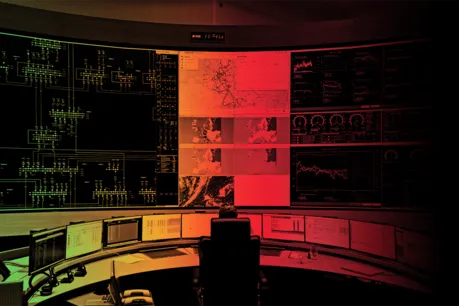
However, this success has exposed weaknesses in Europe’s grid infrastructure. Power grids were originally designed for predictable, centralized generation from coal, gas, and nuclear plants. Solar energy, by contrast, is decentralized and intermittent, fluctuating with weather conditions and time of day. During sunny periods, supply can exceed demand, leading to grid congestion and even negative electricity prices. When clouds roll in or night falls, generation drops sharply, forcing operators to rely on backup sources or imports to maintain stability.
This growing imbalance is straining utilities and challenging regulators. Grid operators in several countries have had to curtail solar output to prevent overloads, wasting potential clean energy. In Germany, for instance, some regions now produce more electricity than the local grid can handle, prompting the need for expensive network upgrades. Similar issues are emerging in southern Europe, where high solar penetration is creating daily swings in power flows that existing systems struggle to manage efficiently.
To address these challenges, Europe is accelerating investments in grid modernization, storage solutions, and cross-border interconnections. Battery storage capacity is expanding rapidly, allowing surplus solar power to be stored and released during evening hours. Countries are also exploring advanced grid technologies such as smart meters, demand-response programs, and flexible pricing to encourage consumers to shift energy use to periods of high solar output. Meanwhile, efforts to link national grids more closely are helping balance regional supply and demand across borders.
The transition is not without cost. Expanding transmission networks and building large-scale storage systems require billions in new investment. Regulators must also navigate complex permitting and environmental approval processes, which often slow down infrastructure development. Still, experts argue that these upgrades are essential if Europe is to achieve its long-term goal of a fully renewable power system.
Beyond the technical and financial aspects, the solar surge is reshaping Europe’s energy landscape in other ways. It is reducing dependence on imported fossil fuels, strengthening energy security, and creating new economic opportunities in clean technology industries. The growth of solar has also spurred innovation in hybrid energy systems that combine solar, wind, and storage to deliver more consistent power generation.
In the coming years, Europe’s challenge will be to ensure that its grid evolves as quickly as its renewable capacity. The solar boom has proven that the continent can lead the global energy transition, but it has also revealed that clean energy success depends as much on infrastructure as on ambition. Balancing this equation will determine whether Europe can sustain its momentum and build a resilient, fully renewable power system for the future


Leave a Reply