

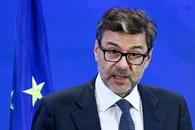
Italy’s Finance Minister Giancarlo Giorgetti has suggested that the nation’s banks could play a key role in helping fund Prime Minister Giorgia Meloni’s proposed tax cuts. The statement reflects the government’s growing effort to balance ambitious fiscal reforms with the need to maintain financial stability and investor confidence.
Giorgetti’s remarks come as the Meloni administration works on a tax relief plan aimed at boosting household spending and business investment. The proposal is part of a broader strategy to stimulate Italy’s slowing economy, which has been facing challenges from weak growth, rising borrowing costs, and persistent inflation. While the government is eager to deliver on its campaign promises, the question of how to finance these tax cuts has become a central debate in Italian politics.
According to Giorgetti, Italy’s banking sector which has benefited from higher interest rates and strong profits in recent quarters is in a position to contribute more to the public good. The finance minister suggested that banks could support the state’s fiscal objectives through measures such as increased tax contributions or voluntary participation in investment initiatives tied to national growth. His comments signal that the government may look to the private financial sector as a partial funding source rather than relying solely on additional borrowing.
The idea has drawn mixed reactions. Supporters argue that banks, having enjoyed record profits from higher lending margins, should share some of those gains to help fund reforms that benefit the broader economy. They claim this approach could create a fairer balance between private sector success and public welfare. Critics, however, warn that placing too much fiscal burden on banks could backfire by discouraging investment, tightening credit conditions, or undermining market confidence.
Prime Minister Meloni’s administration views tax cuts as a crucial tool for economic revival. The plan includes lowering personal income taxes for middle-income earners, providing relief for small businesses, and simplifying the country’s complex tax structure. Government officials believe these measures could help stimulate domestic demand and improve Italy’s competitiveness within the European Union.
However, Italy’s high public debt among the largest in Europe limits the government’s flexibility. The European Commission has been urging Rome to maintain fiscal discipline while pursuing growth-friendly policies. Any move to fund tax cuts through additional spending could draw scrutiny from EU partners and investors concerned about Italy’s long-term fiscal sustainability.
Giorgetti has emphasized that the government’s approach will be pragmatic and designed to avoid destabilizing financial markets. He also hinted that temporary measures or one-off contributions from banks could be used to bridge funding gaps without imposing permanent new taxes. The goal, he noted, is to support economic recovery while keeping Italy’s debt trajectory under control.
In recent months, Italian banks have posted strong earnings thanks to the European Central Bank’s policy of high interest rates, which has widened profit margins on loans. This has fueled discussions across Europe about whether banks should bear part of the cost of supporting public budgets strained by inflation and energy subsidies. Italy’s consideration of such an approach reflects a broader European debate on how to balance fiscal responsibility with economic stimulus.
In conclusion, Giorgetti’s statement underscores the Meloni government’s determination to implement tax relief while keeping public finances stable. By calling on banks to contribute to the funding effort, Italy is exploring a politically strategic way to deliver on economic promises without significantly increasing public debt. Whether this approach succeeds will depend on how effectively the government can collaborate with the financial sector and reassure investors that fiscal prudence remains a top priority for Europe’s third-largest economy.


Leave a Reply