

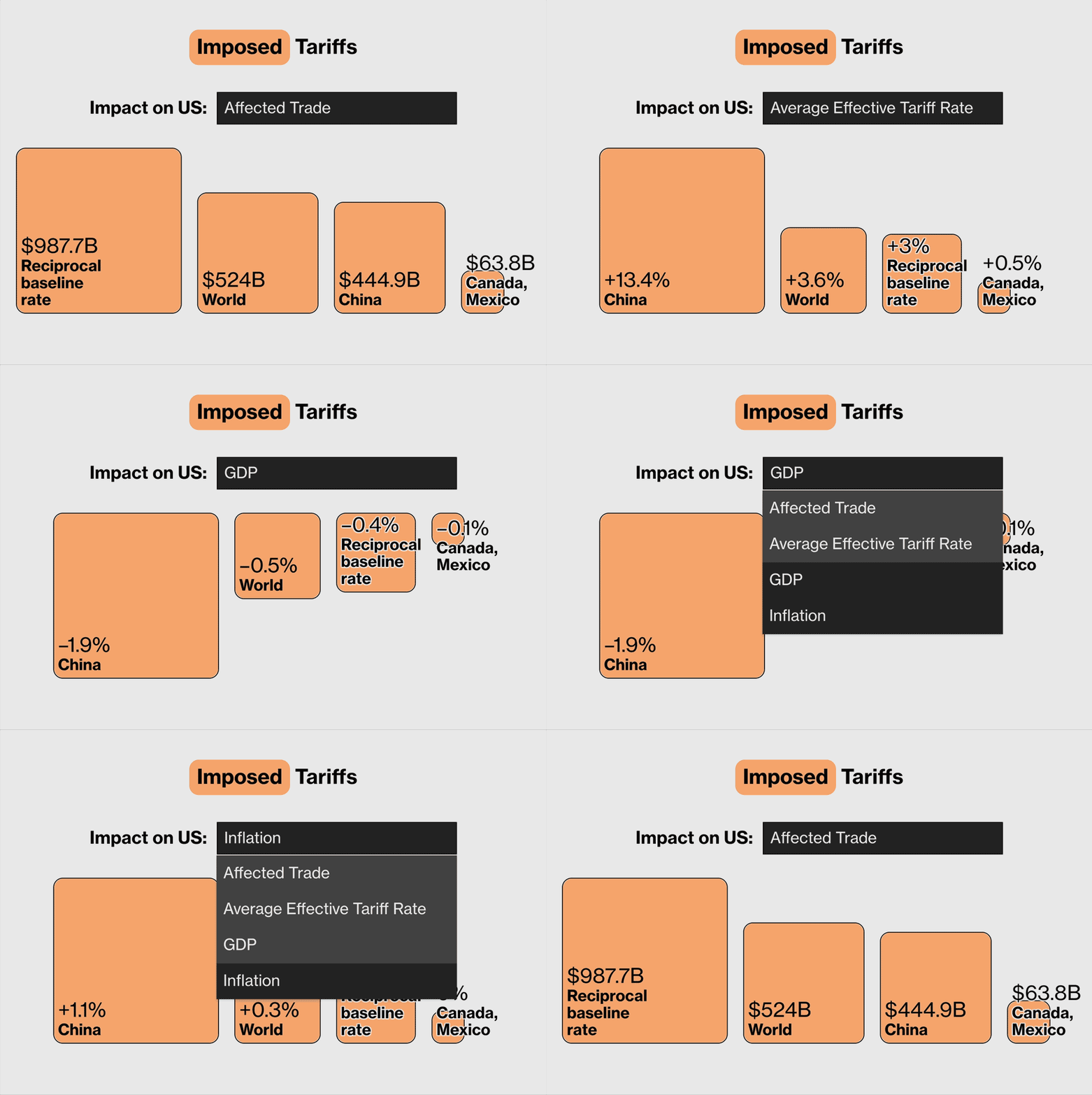
As former U.S. President Donald Trump renews his calls for higher tariffs and trade protection, economists and businesses are once again analyzing the far-reaching effects of his trade policies. Trump’s approach to tariffs, which began during his first term and is now being revived in political discussions, continues to shape global trade flows, corporate strategies, and consumer prices.
Tariffs were one of the most defining features of Trump’s economic agenda. His administration imposed duties on hundreds of billions of dollars’ worth of imports from China, the European Union, Canada, and Mexico, claiming they were necessary to protect American jobs and industries. While the tariffs did shift certain manufacturing operations back to the United States, they also sparked retaliatory measures and raised costs for both producers and consumers.
The China Tariffs and Global Ripple Effects
The cornerstone of Trump’s trade war was the tariff campaign against China. Beginning in 2018, the U.S. imposed tariffs on a wide range of Chinese goods, from electronics and machinery to furniture and clothing. The goal was to reduce the trade deficit and pressure Beijing to change its industrial and intellectual property policies.
Initially, the tariffs forced some U.S. manufacturers to relocate parts of their supply chains to countries such as Vietnam and India. However, they also increased import costs for American companies and led to higher consumer prices. Chinese retaliation targeted U.S. agricultural exports, particularly soybeans, resulting in significant losses for American farmers. To mitigate these effects, Washington issued billions of dollars in subsidies to the agricultural sector, effectively offsetting the tariff revenue.
Domestic Industries and Inflation Pressure
Trump’s tariff strategy aimed to boost domestic production, especially in steel, aluminum, and automotive manufacturing. Certain industries benefited from the temporary protection against foreign competition, but the gains were uneven. U.S. steelmakers saw short-term profits rise, while downstream industries that rely on steel and aluminum faced higher input costs.
For consumers, the tariffs indirectly contributed to inflation by raising the cost of imported goods. Retailers, electronics manufacturers, and automakers passed part of the additional costs on to customers. This inflationary pressure has remained a concern even after some tariffs were suspended or reduced, as global supply chains continue to adjust.
Economic Impact and Future Outlook
The overall economic impact of Trump’s tariffs remains mixed. While they succeeded in bringing attention to trade imbalances and supply chain vulnerabilities, they also disrupted long-term trade partnerships and weakened global confidence in open markets. Analysts argue that the tariffs reduced global GDP growth by a small but significant margin during the late 2010s.
Today, discussions around new tariffs have reemerged, with Trump and his supporters advocating for a universal import tax or selective duties on strategic goods. Economists warn that a return to large-scale tariffs could reignite trade tensions, trigger retaliatory measures, and complicate the fight against inflation.
As the world watches the evolving U.S. political landscape, one thing is clear: Trump’s tariff policies have permanently altered the global trade conversation. Whether future administrations double down on protectionism or move toward renewed cooperation will determine the next chapter of the world economy.


Leave a Reply