

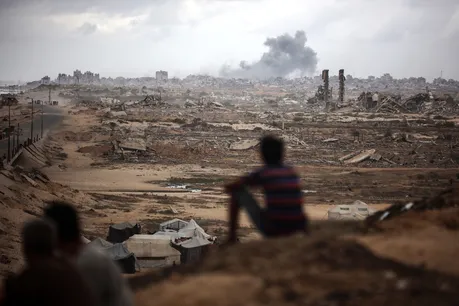
As a fragile ceasefire begins to take hold in Gaza, uncertainty looms large over the war-torn enclave. After months of intense conflict, Gazans are now facing an equally difficult question: who will govern and rebuild the Strip once the guns fall silent? The humanitarian crisis remains severe, infrastructure lies in ruins, and political divisions threaten to derail any hope of stability.
The ceasefire, brokered with the help of international mediators, has brought temporary calm but not a lasting solution. While many residents welcome the end of airstrikes and displacement, they also express deep skepticism about what comes next. The question of governance — whether it will be local authorities, international administrators, or a joint Arab-led effort — remains unresolved.
A Region in Ruins
Gaza’s devastation is unprecedented. Homes, hospitals, schools, and entire neighborhoods have been destroyed, leaving millions without basic services. Humanitarian agencies warn that rebuilding will take years, if not decades, and that international coordination will be crucial. Yet, with no clear governing authority in place, aid distribution and reconstruction planning remain chaotic.
Ordinary Gazans are struggling with shortages of food, water, and electricity. Many families have returned to find their homes reduced to rubble, while others remain displaced in overcrowded shelters. The ceasefire may have paused the violence, but the suffering continues under the weight of economic collapse and uncertainty about the future.
Power Vacuum and Political Uncertainty
The biggest challenge facing Gaza today is the power vacuum left by the conflict. Questions about governance are fueling political tensions between Palestinian factions and regional powers. The Palestinian Authority (PA), based in the West Bank, has signaled willingness to assume control, but many Gazans remain distrustful due to past political failures and perceived corruption.
Meanwhile, regional players such as Egypt, Qatar, and Saudi Arabia are discussing frameworks for post-war administration. International diplomats have floated the idea of a multinational oversight body to manage reconstruction and security, but such proposals face logistical and political hurdles. Without a legitimate and widely accepted governing structure, instability could easily return.
International and Local Concerns
Western countries have pledged humanitarian aid, yet most are reluctant to commit to long-term political involvement. Israel has stated that it does not seek to occupy Gaza but insists that any future governance must ensure its security. This stance adds complexity to already delicate negotiations.
Inside Gaza, civic groups, youth organizations, and local leaders are calling for an inclusive political process that empowers local voices rather than imposing solutions from outside. Many believe that lasting peace can only emerge through genuine Palestinian unity and transparent governance, not foreign administration.
A Fragile Hope
For now, the ceasefire offers Gazans a moment of relief and a faint glimmer of hope. Children have returned to makeshift schools, and families are attempting to rebuild what little remains of their lives. Yet beneath that fragile calm lies deep uncertainty.
Until a credible plan for governance, reconstruction, and reconciliation is agreed upon, Gaza’s future will remain in question. The world may have helped silence the weapons, but the battle for Gaza’s political future is only just beginning.


Leave a Reply